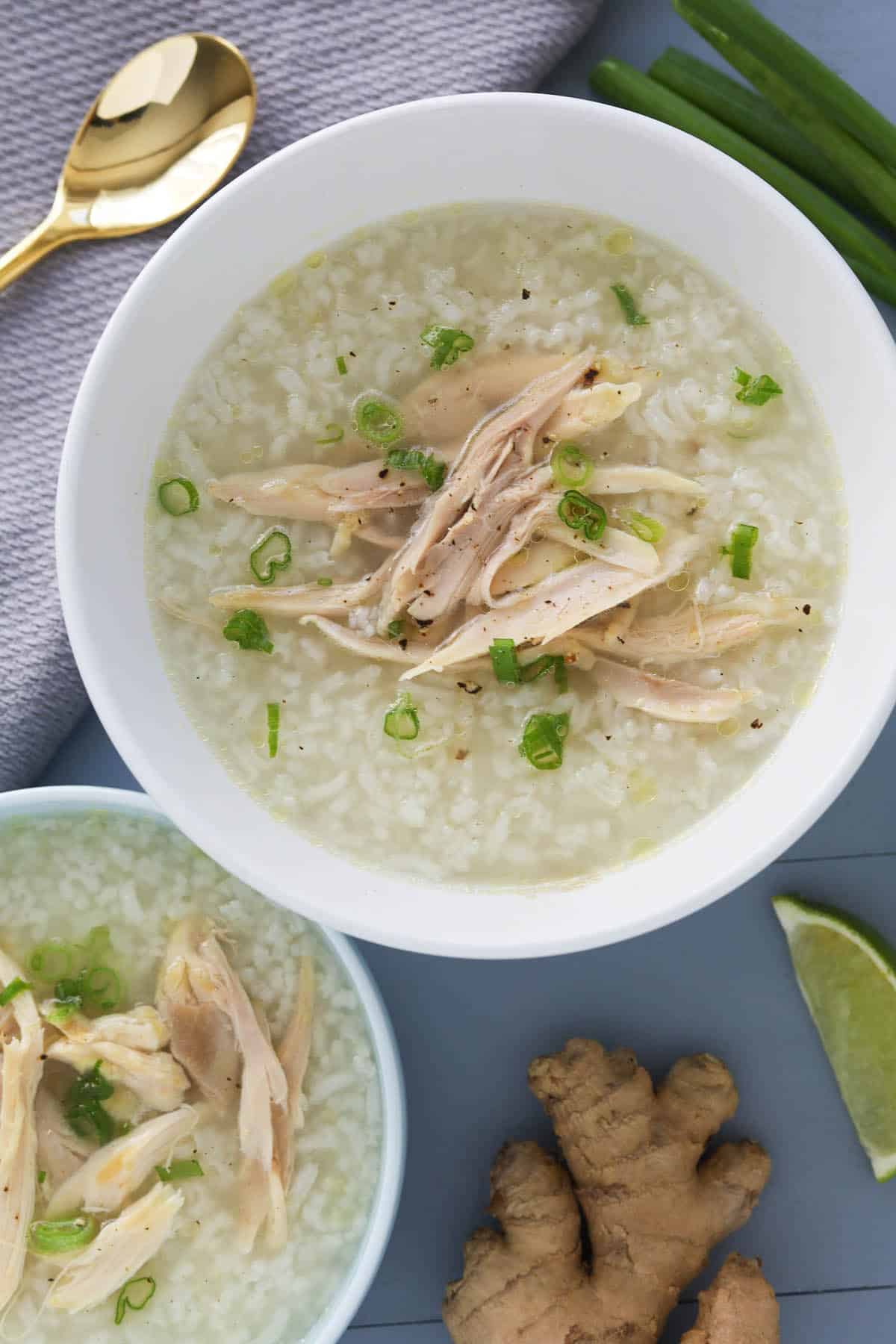
Vietnamese Chicken Rice Porridge, or Cháo Gà, is a classic comfort food enjoyed throughout Vietnam. This hearty dish features tender shredded chicken simmered with rice until it becomes smooth and creamy, then topped with fresh herbs, green onions, and crispy fried shallots for extra flavor.
Simple yet incredibly satisfying, Cháo Gà is perfect for breakfast, lunch, or a light dinner. It’s easy to make with everyday ingredients and is especially comforting on chilly days or whenever you’re craving a warm, nourishing meal.
1. Vietnamese Chicken Rice Porridge ( Yield: 12 Serving )
Ingredients
- 3 lb chicken or turkey, bone-in, cooked or raw
- 28 c filtered water
- 87 g fresh ginger root, peeled and sliced into 1/4-inch pieces
- 1 large yellow onion, halved
- 2 tbsp salt
- 2 tbsp fish sauce
- 334 g long grain white rice (about 2 scoops)
- 334 g short grain white rice (about 2 scoops)
Garnish
- 2–3 tbsp fresh ginger, peeled and finely julienned
- 3 stalks green onions, thinly sliced
- 1 bunch cilantro, chopped into 1/3-inch pieces
- Sambal chile paste, to taste
Instructions
If using raw chicken, rinse it under cold water and place it in a large stockpot. Add the filtered water, sliced ginger, halved onion, salt, and fish sauce. Bring to a gentle boil over medium-high heat, then reduce the heat to low. Simmer for 45–60 minutes, skimming off any foam that rises to the surface.
Once the chicken is fully cooked, remove it from the pot and let it cool slightly. If using cooked chicken or turkey, simply add the meat, ginger, onion, salt, fish sauce, and water to the pot and simmer for about 30 minutes to develop a flavorful broth.
While the chicken cools, remove the meat from the bones and shred it into bite-sized pieces. Discard the skin and bones or save them for making additional stock.
Rinse the long grain and short grain rice under cold water until the water runs mostly clear. Drain well.
Remove the ginger slices and onion from the broth, then stir in both types of rice. Bring the broth back to a gentle boil, then reduce the heat to low.
Simmer the rice for 45–60 minutes, stirring frequently to prevent it from sticking to the bottom of the pot. As the rice cooks, it will gradually break down and create a thick, creamy porridge. If the porridge becomes too thick, add a little more hot water until it reaches your desired consistency.
Return the shredded chicken or turkey to the pot and stir well. Simmer for another 5–10 minutes until the meat is heated through and the flavors are well combined. Taste and adjust the seasoning with additional salt or fish sauce if needed.
Ladle the hot chicken rice porridge into serving bowls. Garnish with julienned fresh ginger, sliced green onions, chopped cilantro, and sambal chile paste to taste. Serve immediately while hot.
2. Tips for Perfect Vietnamese Chicken Rice Porridge
Using bone-in poultry is essential for building a rich, naturally sweet broth. The bones release collagen and flavor that give the porridge its signature depth without heaviness.
Combining long grain and short grain rice is a traditional technique that improves texture. Long grain rice helps keep the porridge light, while short grain rice contributes creaminess.
Stirring regularly prevents rice from sticking and ensures even cooking. As the porridge thickens, gentle stirring becomes even more important.
Fresh ginger plays a key role in flavor and digestion. Adding some ginger during cooking and more as garnish creates layers of warmth and aroma.
Adjust the thickness to your preference. If the porridge becomes too thick, simply add hot water or broth and stir until smooth.
3. Frequently Asked Questions
What makes Vietnamese chicken rice porridge different from other congee styles?
Vietnamese porridge is generally lighter and more broth-forward, with visible rice grains rather than a fully broken-down texture.
Can this porridge be made ahead of time?
Yes, it can be prepared in advance, but it will thicken as it cools. Reheat gently with added water or broth to restore consistency.
Is fish sauce necessary in this recipe?
Fish sauce adds depth and umami, but the porridge can still be enjoyable without it if you prefer a milder flavor.
What type of chicken works best?
Whole chicken or bone-in thighs and drumsticks are ideal, as they provide both meat and flavorful bones.
Can this dish be served to children or elderly family members?
Yes, cháo gà is soft, easy to digest, and commonly served to people of all ages.
How spicy should Vietnamese chicken rice porridge be?
The base porridge is mild. Heat is added individually through sambal or chili, allowing everyone to customize their bowl.
4. Nutrition Information
| Nutrient | Amount per Serving |
|---|---|
| Calories | 285 kcal |
| Protein | 22 g |
| Carbohydrates | 32 g |
| Fat | 7 g |
| Saturated Fat | 2 g |
| Fiber | 1 g |
| Sodium | 620 mg |
Vietnamese Chicken Rice Porridge is more than just a meal—it is a symbol of comfort, care, and tradition. With its gentle flavors, nourishing broth, and customizable toppings, cháo gà fits effortlessly into everyday meals or special family gatherings.
This detailed recipe allows you to recreate an authentic Vietnamese experience at home, whether you are cooking for a crowd or seeking a soothing dish for yourself. By mastering the balance of rice, broth, and aromatics, you can enjoy a timeless dish that has warmed Vietnamese kitchens for generations.
