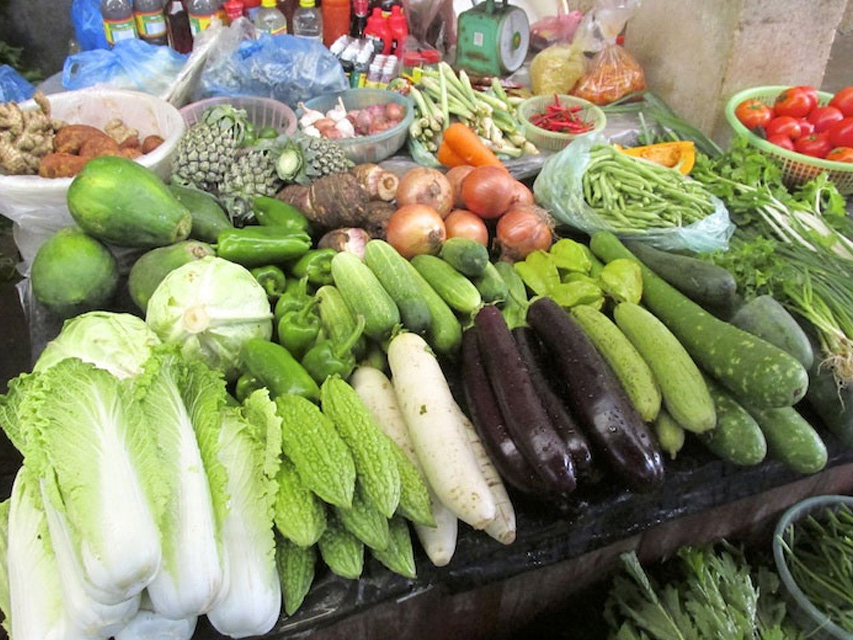
Vegetables are an essential part of Vietnamese cuisine, adding freshness, color, and flavor to everyday meals. They are enjoyed in many ways, including stir-fried, boiled, steamed, and served fresh alongside noodles, rice, and grilled dishes.
Thanks to Vietnam’s tropical climate, a wide variety of vegetables are available year-round. Here are ten of the most popular vegetables commonly found in traditional Vietnamese meals.
1. Water Spinach (Rau Muống)
Water spinach is one of the most beloved vegetables in Vietnam and appears on dining tables across the country.
Its hollow stems and tender leaves have a mild flavor and crisp texture, making it incredibly versatile. One of the most popular dishes is stir-fried water spinach with garlic (Rau Muống Xào Tỏi), where the vegetable is quickly cooked over high heat to retain its freshness and crunch.
Water spinach is also commonly boiled and served with fish sauce for dipping or added to sour soups in southern Vietnam.
Rich in vitamins A and C, iron, and fiber, it’s both nutritious and delicious.
2. Mustard Greens (Cải Xanh)
Mustard greens are another staple in Vietnamese households. Their slightly peppery flavor works well in a variety of dishes.
They are often stir-fried with garlic, cooked with pork, or added to noodle soups. During cooler months, mustard greens are frequently used in hearty broths.
Pickled mustard greens (Dưa Cải Chua) are also extremely popular. This tangy side dish is served with braised pork, roasted duck, and many traditional meals, especially during Tet.
3. Bok Choy (Cải Thìa)
Bok choy is widely used in both home cooking and restaurant dishes throughout Vietnam.
Its tender leaves and crunchy stems make it perfect for stir-fries, soups, and hot pots. Garlic stir-fried bok choy is one of the simplest and most popular preparations.
Because of its mild taste, bok choy pairs well with beef, chicken, tofu, mushrooms, and seafood.
It’s also packed with vitamins A, C, and K, making it a healthy addition to everyday meals.
4. Malabar Spinach (Rau Mồng Tơi)
Malabar spinach is known for its thick, glossy leaves and slightly slippery texture when cooked.
It is especially popular in Vietnamese soups, where it is often combined with shrimp, crab, or minced pork. One of the most common family dishes is Malabar spinach soup with shrimp, which is light, nutritious, and easy to prepare.
The vegetable thrives during Vietnam’s hot summers and is believed to have cooling properties, making it a favorite during warm weather.
5. Chayote (Su Su)
Chayote is a mild-flavored vegetable commonly grown in Vietnam’s mountainous regions, particularly around Sapa and Tam Dao.
Both the fruit and the tender shoots are edible. The fruit is often stir-fried with beef or garlic, while the shoots are prized for their crisp texture and delicate flavor.
Simple stir-fried chayote shoots have become a specialty dish in northern Vietnam and are frequently enjoyed with steamed rice.
6. Morning Glory Leaves (Rau Lang)
Sweet potato leaves are another nutritious vegetable commonly found in Vietnamese kitchens.
They can be boiled, stir-fried, or cooked into soups. Boiled sweet potato leaves are often served alongside fermented shrimp paste or fish sauce.
The leaves have a slightly earthy flavor and tender texture, making them a simple yet satisfying side dish.
They are also rich in antioxidants, vitamins, and dietary fiber.
7. Bitter Melon (Khổ Qua)
Bitter melon has a distinctive bitter taste that may surprise first-time visitors, but it is highly valued in Vietnamese cuisine.
One of the most famous dishes is stuffed bitter melon soup, where the hollowed fruit is filled with seasoned pork and mushrooms before being simmered in a clear broth.
This dish is especially popular during Lunar New Year because the name “khổ qua” can be interpreted as “hardships passing,” symbolizing hope for a better year ahead.
Despite its bitterness, many people appreciate its refreshing taste and potential health benefits.
8. Winter Melon (Bí Đao)
Winter melon is a light, refreshing vegetable commonly used in soups throughout Vietnam.
Its mild flavor allows it to absorb the taste of broths made with pork ribs, shrimp, or dried seafood.
Winter melon soup is particularly popular during hot weather because it is believed to help cool the body.
The vegetable is also low in calories while providing vitamins, minerals, and hydration.
9. Banana Blossom (Hoa Chuối)
Banana blossom is one of the most unique vegetables in Vietnamese cuisine.
Thinly sliced banana blossom is commonly served fresh in salads or as a crunchy accompaniment to noodle dishes such as Bún Bò Huế and Bún Riêu.
It has a slightly nutty flavor and crisp texture that pairs beautifully with herbs, peanuts, and tangy fish sauce dressings.
Many visitors are surprised to learn that the flower of the banana plant is an important ingredient in Vietnamese cooking.
10. Pumpkin Leaves and Shoots (Rau Bí)
Pumpkin leaves and young shoots are widely enjoyed in rural areas and are becoming increasingly popular in cities as well.
They are usually stir-fried with garlic or cooked into light soups with shrimp.
The tender vines have a pleasantly soft texture and subtle sweetness that pairs well with simple seasonings.
Pumpkin shoots are an excellent example of Vietnam’s resourceful cooking traditions, where nearly every edible part of a plant is used.
Why Vegetables Are So Important in Vietnamese Cuisine
Vietnamese meals are carefully balanced to include a variety of flavors, textures, and nutrients. Vegetables help create this balance by adding freshness and reducing the richness of meat-based dishes.
Many meals feature several vegetable dishes alongside rice, soup, and protein. Fresh herbs and leafy greens are also commonly served with spring rolls, grilled meats, and noodle dishes, allowing diners to customize each bite.
This emphasis on vegetables contributes to the light, healthy character of Vietnamese cuisine and is one reason it is widely regarded as one of the healthiest diets in the world.
Tips for Trying Vietnamese Vegetables
If you’re visiting Vietnam, don’t hesitate to explore the wide variety of local vegetables available at restaurants and markets.
Here are a few tips:
- Try both cooked and fresh vegetables to experience different flavors and textures.
- Order traditional stir-fried vegetable dishes as side dishes to accompany your meal.
- Visit local markets to see the impressive range of seasonal produce.
- Be open to trying unfamiliar vegetables like bitter melon or banana blossom.
- Pair vegetables with Vietnamese dipping sauces for an authentic dining experience.
Final Thoughts
Vegetables are at the heart of Vietnamese cuisine, bringing freshness, nutrition, and balance to everyday meals. Exploring these ten popular Vietnamese vegetables is a delicious way to better understand the country’s rich culinary traditions and enjoy the wholesome ingredients that make Vietnamese food so distinctive.
