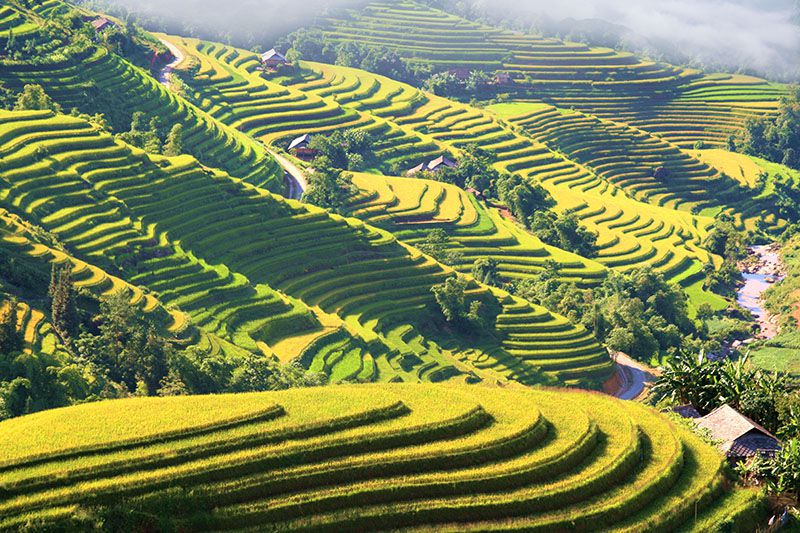
Vietnam is a country where mountains meet mist, and nowhere is that more breathtaking than in its rice terraces. Over centuries, ethnic minority communities have carved entire hillsides into layered steps of green and gold.
If you’re planning a trip to Vietnam and want to experience something beyond beaches and busy cities, here are the top 5 Vietnam rice terraces you should consider visiting.
1. Sapa
For many international travelers, Sapa is the first introduction to Vietnam’s rice terraces. Located in the far north near the Chinese border, Sapa combines stunning mountain scenery with easy accessibility.
From Hanoi, you can reach Sapa by overnight train or highway bus in about 5–6 hours. Once there, you’ll find sweeping terraced fields cascading down into valleys, often wrapped in mist. The landscape changes dramatically with the seasons — bright green in summer and golden yellow during harvest.
Sapa is also home to ethnic minority communities such as the Hmong, Red Dao, and Tay. Trekking tours allow visitors to walk through rice fields, stay in local homestays, and learn about traditional farming methods.
Best time to visit:
-
May–June (water season)
-
September–October (harvest season)
2. Mù Cang Chải
If you’re looking for a more untouched and authentic experience, Mù Cang Chải is a spectacular choice. Located in Yen Bai Province, this region is famous for some of the most impressive rice terraces in Vietnam.
Unlike Sapa, Mù Cang Chải is less commercialized. The terraces here stretch across steep mountains, forming dramatic curves that look like natural artwork. The area has been recognized as a national landscape heritage site.
Traveling here requires a bit more effort — about 6–7 hours by car from Hanoi — but the reward is breathtaking panoramic views and fewer crowds.
Foreign tourists especially love visiting during harvest season when the hills turn brilliant gold under the sun.
3. Hoàng Su Phì
Hoàng Su Phì, located in Ha Giang Province, offers one of the most remote and stunning terrace landscapes in the country. This destination is perfect for adventurous travelers who want to explore off-the-beaten-path Vietnam.
The rice terraces here are layered dramatically along steep slopes, surrounded by rugged mountains and traditional villages. Because tourism is still developing, you’ll find fewer tourists and a more peaceful atmosphere.
Hoàng Su Phì is ideal for:
-
Nature photographers
-
Motorbike travelers
-
Cultural explorers
The journey may involve winding mountain roads, but the scenery is truly unforgettable.
4. Y Tý
Y Tý is often called the “kingdom of clouds.” Situated at over 2,000 meters above sea level, this highland commune offers a unique combination of rice terraces and dramatic cloud formations.
For foreign visitors seeking a magical atmosphere, Y Tý provides stunning sunrise and sunset views. The terraces appear to float above a sea of clouds during certain times of the year.
This region is home to the Ha Nhi ethnic group, known for their distinctive earthen houses. Visiting Y Tý gives travelers the chance to experience traditional highland life in a quiet and less touristy environment.
Because of its remote location, Y Tý is best suited for experienced travelers comfortable with mountain travel.
5. Pu Luong
If you prefer something closer to Hanoi and easier to access, Pu Luong Nature Reserve is an excellent option. Located about 4 hours from the capital, Pu Luong offers beautiful terraced fields combined with eco-lodges, waterfalls, and traditional stilt houses.
The rice terraces here are gentler and more relaxed compared to the dramatic northern mountains. It’s perfect for travelers who want light trekking, nature walks, and comfortable accommodation.
Pu Luong is particularly popular with couples and families who want scenic beauty without long, difficult travel routes.
6. Practical Travel Tips When Visiting Vietnam’s Rice Terraces
Visiting Vietnam’s rice terraces is an unforgettable experience, but these mountain regions require some preparation. Here’s what international travelers should know before going.
6.1. Choose the Right Season for Your Travel Style
Vietnam’s rice terraces change dramatically throughout the year:
-
May–June (Water Season): Farmers flood the fields before planting. The terraces reflect the sky like mirrors — perfect for photographers.
-
July–August (Green Season): The rice is growing, and the mountains are covered in vibrant green.
-
September–October (Harvest Season): The most popular time. The fields turn golden and create stunning landscapes.
-
November–March: Cooler weather, sometimes foggy or cloudy. Fewer tourists, but less colorful scenery.
If you want iconic golden photos, aim for late September. If you prefer fewer crowds, consider May or early June.
6.2. Transportation: Plan Carefully
Most rice terrace destinations are in northern mountainous provinces. Roads can be narrow, steep, and winding.
From Hanoi:
-
Sapa: 5–6 hours by highway bus or limousine van.
-
Mù Cang Chải: 6–7 hours by car.
-
Hoàng Su Phì: 7–8 hours by car.
-
Pu Luong: About 4 hours by car.
If you’re not experienced driving in Asia, avoid renting a motorbike in remote areas. Instead:
-
Book a private car with driver
-
Join a guided tour
-
Use reputable bus companies
Mountain weather can change quickly, so always allow extra travel time.
6.3. Accommodation Options
You’ll find different types of accommodation depending on the destination:
-
Sapa: Hotels, boutique resorts, luxury mountain lodges, and homestays.
-
Mù Cang Chải & Hoàng Su Phì: Mostly homestays and small guesthouses.
-
Pu Luong: Eco-lodges and comfortable nature retreats.
If you want cultural immersion, stay in a local homestay. Many ethnic minority families offer clean, simple rooms with home-cooked meals.
Important:
-
Book in advance during harvest season.
-
Wi-Fi may be slow in remote areas.
-
Electricity interruptions can occasionally happen.
6.4. What to Pack
Mountain weather in northern Vietnam can be unpredictable.
Essential items:
-
Comfortable hiking shoes with good grip
-
Light rain jacket or poncho
-
Sunscreen and hat (sun can be strong at high altitude)
-
Warm jacket (especially from October to March)
-
Insect repellent
-
Portable power bank
Avoid wearing slippery shoes — terrace paths can be muddy and uneven.
6.5. Health & Safety
Rice terrace regions are generally safe for foreign tourists, but keep these points in mind:
-
Walk carefully on narrow terrace edges.
-
Do not step on planted rice fields — always follow your guide.
-
Bring personal medication, as pharmacies are limited in remote villages.
-
Drink bottled or filtered water.
-
Travel insurance is highly recommended.
If trekking for several hours, stay hydrated and take breaks — humidity can be high.
6.6. Money & Payments
In remote mountain areas:
-
Credit cards are rarely accepted.
-
ATMs may only be available in larger towns like Sapa.
-
Bring enough Vietnamese Dong (VND) in cash.
Small bills are useful for:
-
Buying snacks
-
Paying local guides
-
Purchasing handmade souvenirs
6.7. Cultural Etiquette
Vietnam’s rice terrace regions are home to ethnic minority communities such as Hmong, Dao, Tay, and Ha Nhi people. Respecting local customs is very important.
Helpful etiquette tips:
-
Always ask before taking photos of people.
-
Dress modestly when visiting villages.
-
Remove shoes when entering someone’s home.
-
Avoid public displays of excessive affection.
-
Do not give candy or money directly to children.
Supporting local communities by booking homestays or hiring local guides is a meaningful way to contribute.
6.8. Photography Tips
If photography is one of your main goals:
-
Wake up early for sunrise light.
-
Late afternoon offers warm golden tones.
-
Foggy mornings create dramatic landscapes.
-
Bring a wide-angle lens for sweeping views.
Be patient — mountain weather can change within minutes, creating incredible photo opportunities.
6.9. Internet & Connectivity
Mobile signal varies depending on the location. Sapa usually has good coverage, but Hoàng Su Phì and Y Tý may have weak signals.
Consider buying a Vietnamese SIM card in Hanoi for affordable data access. Viettel is often the most reliable network in mountainous areas.
6.10. Environmental Responsibility
Rice terraces are active farming systems, not just tourist attractions. Help preserve them by:
-
Staying on marked paths
-
Not littering
-
Avoiding damage to crops
-
Using refillable water bottles
Sustainable tourism helps protect these landscapes for future generations.
Final Thoughts
When I think about the top 5 Vietnam rice terraces — Mù Cang Chải, Sapa, Hoàng Su Phì, Y Tý, and Pu Luong — each offers something unique. Some are dramatic and vast, others are peaceful and intimate. But all of them represent the heart of Vietnam’s mountain culture.
If you truly want to understand Vietnam beyond its cities and beaches, visiting these rice terraces is unforgettable. Standing among the layered fields, watching farmers work under golden sunlight, I always feel a deep connection to the land and the generations who shaped it.
Vietnam’s rice terraces are not just destinations — they are masterpieces carved into mountains.
