Vietnam is home to some of the most spectacular caves in the world. Many of these caves are located within national parks and UNESCO World Heritage Sites, offering visitors unforgettable experiences surrounded by breathtaking landscapes. If you’re planning a trip to Vietnam, here are ten of the best caves to add to your travel itinerary.
1. Son Doong Cave (Quang Binh Province)
Son Doong Cave is the largest cave in the world and one of Vietnam’s most extraordinary natural wonders. Located in Phong Nha–Ke Bang National Park, the cave was officially explored in 2009 and has since become a dream destination for adventure travelers.
The cave is so massive that it contains its own underground river, jungle, and weather system. Towering stalagmites, enormous chambers, and skylights where sunlight streams into the cave create a landscape unlike anywhere else on Earth.
Access is strictly limited, and visitors must join a multi-day guided expedition that requires a good level of physical fitness.
2. Phong Nha Cave (Quang Binh Province)
Phong Nha Cave is one of the most famous caves in Vietnam and gives its name to Phong Nha–Ke Bang National Park.
Visitors reach the cave by taking a scenic boat ride along the Son River before entering its impressive entrance. Inside, you’ll find beautiful stalactites, stalagmites, underground chambers, and calm waterways that stretch deep into the limestone mountains.
The cave is easy to access, making it a great option for families and first-time visitors.
3. Paradise Cave (Quang Binh Province)
Paradise Cave, also known as Thien Duong Cave, is often considered one of the most beautiful dry caves in Asia.
Discovered in 2005, the cave extends for more than 31 kilometers (19 miles), although visitors typically explore the first kilometer along a well-maintained wooden boardwalk.
Its massive chambers are filled with spectacular rock formations, towering stalactites, and naturally sculpted limestone features illuminated by soft lighting.
The spacious pathways make Paradise Cave suitable for visitors of all ages.
4. Hang En Cave (Quang Binh Province)
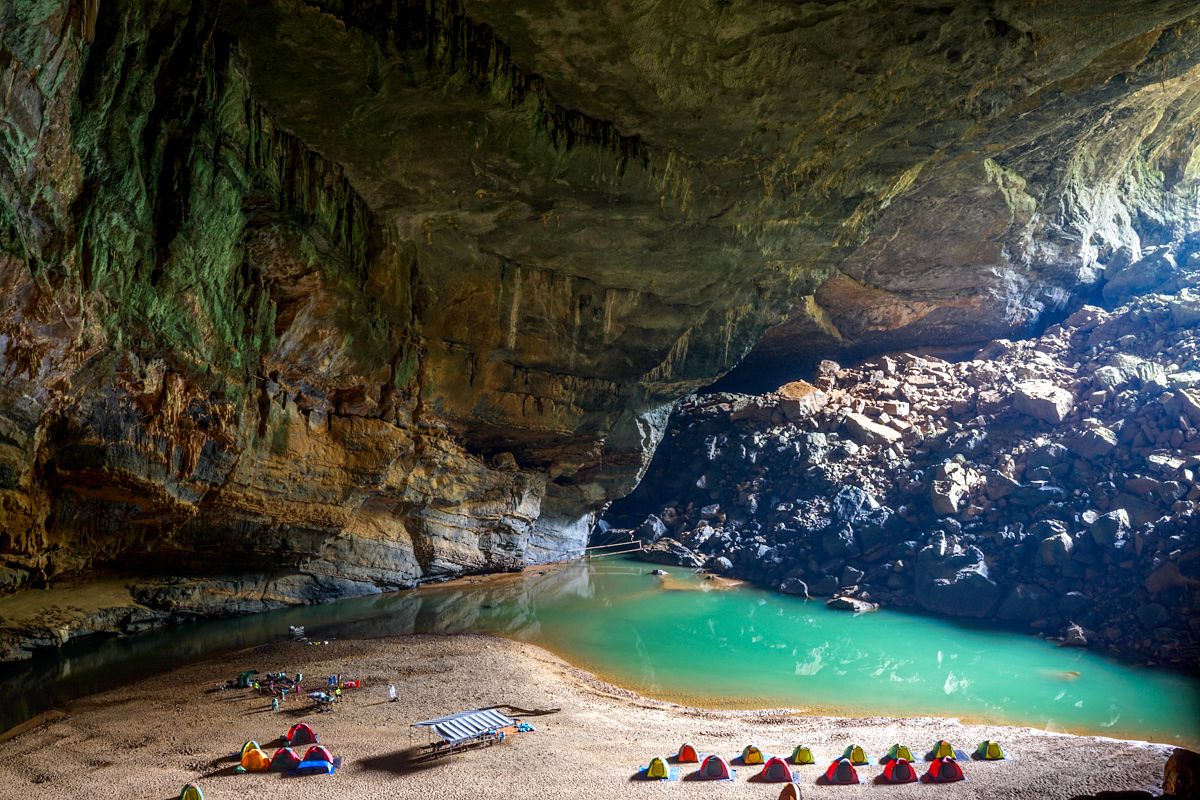
Hang En is the third-largest cave in the world and serves as one of the highlights of multi-day trekking tours in Phong Nha–Ke Bang National Park.
The cave features enormous entrances, a crystal-clear underground river, and a sandy beach where adventure groups camp overnight.
One of its most memorable features is the natural light that pours through the cave entrances, creating breathtaking views for photographers.
Many travelers visit Hang En as part of the journey to Son Doong Cave.
5. Sung Sot Cave (Quang Ninh Province)
Sung Sot Cave, or Surprise Cave, is one of the most popular attractions in Halong Bay.
Located on Bo Hon Island, the cave consists of two enormous chambers filled with impressive stalactites and stalagmites formed over millions of years.
As visitors walk through the cave, colorful lighting highlights the fascinating rock formations, many of which resemble animals and mythical figures.
The elevated viewpoint outside the cave also offers stunning views across Halong Bay.
6. Dau Go Cave (Quang Ninh Province)
Dau Go Cave, meaning “Wooden Stakes Cave,” is another remarkable cave in Halong Bay.
Steeped in local history and legend, the cave is famous for its large chambers and intricate limestone formations.
Natural sunlight entering through the cave’s wide entrance creates a bright, airy atmosphere that supports mosses and small plants growing inside.
Its impressive size and easy accessibility make it a favorite stop on many Halong Bay cruises.
7. Tam Coc Caves (Ninh Binh Province)
Tam Coc is often called “Halong Bay on land” because of its dramatic limestone mountains and peaceful rivers.
Rather than exploring on foot, visitors experience the three caves by taking a traditional sampan boat along the Ngo Dong River.
As the boat gently glides beneath the limestone cliffs, you’ll pass through Hang Ca, Hang Hai, and Hang Ba while enjoying beautiful rice fields and scenic countryside.
The relaxing boat journey is one of Ninh Binh’s most iconic experiences.
8. Mua Cave (Ninh Binh Province)
Despite its name, Mua Cave is best known for the spectacular viewpoint above it rather than the cave itself.
After climbing nearly 500 stone steps to the summit, visitors are rewarded with panoramic views of Tam Coc’s limestone peaks, winding rivers, and rice fields.
The small cave at the base adds historical interest, while the viewpoint has become one of Vietnam’s most photographed locations.
Many travelers combine Mua Cave with a Tam Coc boat tour on the same day.
9. Huong Tich Cave (Hanoi)
Huong Tich Cave is the spiritual heart of the famous Perfume Pagoda complex near Hanoi.
After a scenic boat ride and a climb—or cable car ride—into the Huong Son Mountains, visitors reach this sacred limestone cave, which has served as a Buddhist pilgrimage site for centuries.
Inside, natural rock formations have been given symbolic names and are believed by many visitors to bring good fortune and blessings.
The peaceful atmosphere makes Huong Tich Cave both a cultural and natural attraction.
10. Am Phu Cave (Da Nang)
Located within the Marble Mountains near Da Nang, Am Phu Cave offers a unique combination of natural beauty and spiritual symbolism.
The cave features dramatic lighting, stone stairways, Buddhist statues, and sculptures representing traditional beliefs about the afterlife.
Unlike many caves that focus primarily on geological formations, Am Phu Cave provides visitors with insight into Vietnamese Buddhist culture and folklore.
Its location within the Marble Mountains makes it easy to combine with visits to nearby pagodas and viewpoints.
Final Thoughts
Vietnam’s caves showcase some of the country’s most incredible natural beauty. From the record-breaking chambers of Son Doong to the peaceful river caves of Tam Coc and the impressive limestone formations of Halong Bay, each destination offers a unique adventure.
Exploring these remarkable caves is a memorable way to experience Vietnam’s diverse landscapes and discover why the country has become one of the world’s leading destinations for nature and adventure travel.
