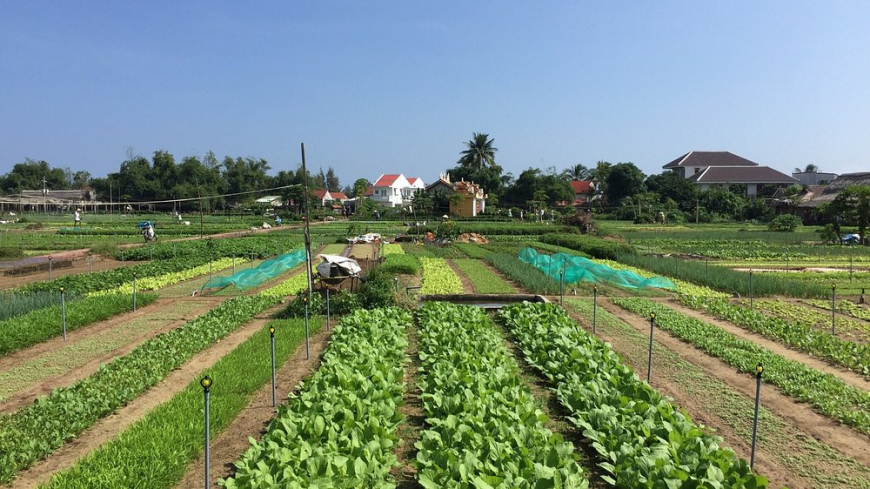
Tra Que Vegetable Village is one of the most charming attractions near Hoi An, offering visitors a chance to experience Vietnam’s rural lifestyle and traditional farming practices. Just a short distance from the UNESCO-listed Ancient Town, the village is known for its lush vegetable gardens, peaceful countryside, and fresh herbs that supply many of Hoi An’s famous restaurants.
Unlike crowded tourist attractions, Tra Que provides a relaxing escape where you can slow down, connect with nature, and learn about local culture. If you’re planning a trip to central Vietnam in 2026, here’s everything you need to know before visiting Tra Que Vegetable Village.
1. Where Is Tra Que Vegetable Village?
Tra Que Vegetable Village is located about 3 kilometers (2 miles) northeast of Hoi An Ancient Town, making it an easy destination for a half-day trip. The village sits between the Co Co River and Tra Que Lagoon, where fertile soil and a mild climate create ideal conditions for growing vegetables and herbs.
The village has been cultivating produce for centuries using traditional organic farming methods, including fertilizing crops with seaweed collected from nearby waterways. Its convenient location also makes it easy to combine with visits to An Bang Beach or Hoi An Ancient Town.
2. The History of Tra Que Vegetable Village
Tra Que has a history dating back to the 16th century. For generations, local families have grown vegetables and aromatic herbs that are highly valued for their freshness and flavor. The village became famous for producing ingredients used in many traditional dishes from Hoi An and central Vietnam.
In 2024, Tra Que gained international recognition when it was named one of UN Tourism’s Best Tourism Villages, highlighting its successful balance between preserving traditional agriculture and welcoming sustainable tourism.
Today, visitors can still see farmers using age-old techniques that have been passed down through generations.
3. What Makes Tra Que Special?
Unlike many modern farms, Tra Que continues to rely on traditional organic farming methods.
One of the village’s most unique practices is using seaweed collected from nearby lagoons and rivers as natural fertilizer instead of chemical products. This technique helps produce fragrant herbs and vegetables that are widely regarded as some of the freshest in Vietnam.
More than 20 varieties of herbs and leafy vegetables are grown here, including basil, mint, coriander, lettuce, Vietnamese coriander, and water spinach. These ingredients appear in many local specialties such as Cao Lau, Mi Quang, fresh spring rolls, and Vietnamese pancakes.
4. Best Things to Do in Tra Que Vegetable Village
Walk Through the Vegetable Gardens
One of the simplest pleasures is strolling along the narrow paths between rows of vibrant green vegetables.
The peaceful atmosphere is a welcome contrast to the busy streets of Hoi An. You’ll see local farmers watering crops, preparing garden beds, and harvesting fresh produce throughout the day.
Early morning and late afternoon are particularly beautiful times for a walk.
Experience Traditional Farming
Many local farms invite visitors to join everyday farming activities.
Under the guidance of experienced farmers, you can:
- Prepare garden beds
- Plant vegetables
- Water crops using traditional shoulder buckets
- Harvest fresh herbs
- Learn about organic farming techniques
These hands-on experiences provide a better understanding of rural Vietnamese life and have become one of the village’s biggest attractions.
Join a Vietnamese Cooking Class
One of the most popular activities combines farming with cooking.
The experience usually begins by harvesting fresh vegetables directly from the garden before learning how to prepare traditional Vietnamese dishes under the guidance of local chefs.
Popular recipes often include:
- Fresh spring rolls
- Banh Xeo (Vietnamese crispy pancakes)
- Cao Lau
- Mi Quang
- Green papaya salad
Cooking classes are enjoyable for families, couples, and solo travelers alike.
Ride a Bicycle Around the Village
Cycling is one of the best ways to explore Tra Que.
Flat country roads pass through vegetable gardens, rice paddies, and quiet neighborhoods, allowing visitors to enjoy the peaceful scenery at their own pace.
Many bicycle tours also include stops at nearby fishing villages or An Bang Beach.
Meet Local Farmers
One of the highlights of visiting Tra Que is interacting with the friendly local community.
Many farmers are happy to explain how vegetables are grown and harvested. Even simple conversations offer valuable insight into daily life in rural Vietnam.
5. Best Time to Visit
Tra Que Vegetable Village can be visited throughout the year, but the most comfortable weather is generally between February and April, when temperatures are mild and the gardens are especially green. Late summer and autumn can also be pleasant depending on weather conditions.
Within the day, the best times to visit are:
- Early morning (around 7:00–9:00 AM)
- Late afternoon (after 4:00 PM)
These hours are cooler, and you’ll have a better chance of seeing farmers working in the gardens.
6. How to Get There
Getting to Tra Que is simple.
Bicycle
Cycling from Hoi An Ancient Town takes about 15 to 20 minutes and is one of the most enjoyable ways to reach the village.
Motorbike
Renting a motorbike gives you flexibility to explore both the village and nearby attractions.
Taxi or Ride-Hailing Service
A taxi or ride-hailing service reaches Tra Que in approximately 10 minutes from central Hoi An.
Guided Tour
Many Hoi An tours include Tra Que as part of a package that combines farming activities, cooking classes, and visits to nearby attractions.
7. What to Bring
To make your visit more comfortable, consider bringing:
- Comfortable walking shoes or sandals
- Lightweight clothing
- Sunscreen
- A hat
- Sunglasses
- Drinking water
- Camera or smartphone
- Insect repellent
If you plan to participate in farming activities, clothing that can get a little dirty is recommended.
8. Tips for Visiting
A few simple tips will help you enjoy your visit:
- Visit early in the day to avoid the strongest sun.
- Respect local farmers while they work.
- Ask permission before taking close-up photos of people.
- Support local businesses by purchasing fresh produce or joining a cooking class.
- Walk carefully through the gardens to avoid damaging crops.
- Bring cash, as some small vendors may not accept cards.
9. Nearby Attractions
Since Tra Que is located close to Hoi An, it’s easy to combine your visit with other popular destinations.
Nearby attractions include:
- Hoi An Ancient Town
- An Bang Beach
- Cua Dai Beach
- Thanh Ha Pottery Village
- Bay Mau Coconut Forest
- Japanese Covered Bridge
Many travelers spend the morning at Tra Que before exploring Hoi An in the afternoon.
Final Thoughts
Tra Que Vegetable Village is one of the most rewarding places to visit near Hoi An. Its peaceful gardens, friendly local community, and hands-on farming experiences offer a refreshing change from traditional sightseeing.
If you’re visiting central Vietnam in 2026, be sure to include Tra Que in your itinerary. Spending a few hours exploring the gardens, meeting local farmers, and tasting dishes made with freshly harvested herbs is a memorable way to experience Vietnam’s countryside and rich culinary traditions.
