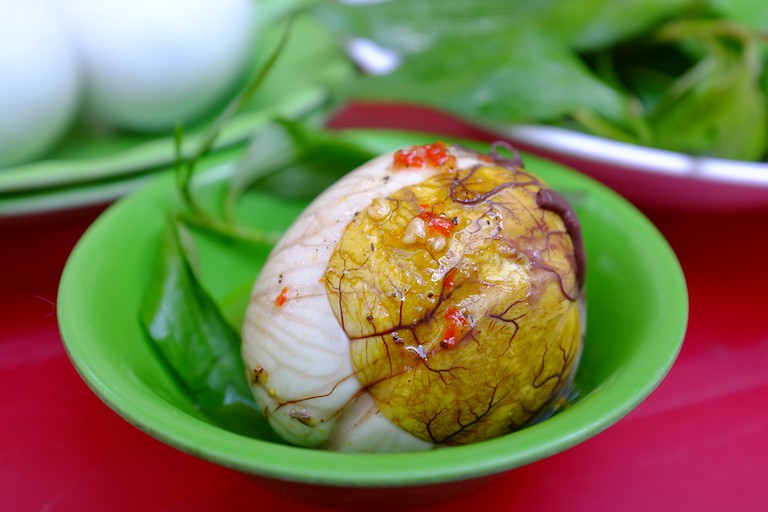
Balut is one of Vietnam’s most famous—and often most surprising—street foods. For many locals, it’s a nutritious snack enjoyed any time of day, while for many foreign visitors, it’s an adventurous culinary experience.
If you’re curious about this unique delicacy, here’s everything you need to know about balut in Vietnam, including what it is, how to eat it, and a few helpful tips before giving it a try.
1. What Is Balut?
In Vietnam, balut is known as hột vịt lộn, which translates to “inside-out duck egg.” It is a fertilized duck egg that has been incubated for about 17 to 19 days before being boiled and eaten.
During this stage of development, the embryo has partially formed, giving balut its distinctive appearance and texture. While this may surprise first-time visitors, balut is considered a traditional delicacy in Vietnam and is commonly sold by street vendors, local markets, and small restaurants.
Balut has a rich, savory flavor that combines the creamy texture of the egg yolk with the tender duck embryo and flavorful broth inside the shell. Many people compare it to a cross between a hard-boiled egg and a rich chicken soup.
Vietnamese people often enjoy balut as an afternoon snack or a late-night meal. It is also commonly believed to be a nutritious food rich in protein, vitamins, and minerals.
2. How to Eat Balut in Vietnam
Trying balut for the first time can feel intimidating, but the process is quite simple. Most vendors serve it warm with a few traditional seasonings that enhance its flavor.
Crack the Top of the Shell
Start by gently tapping the wider end of the egg with a spoon to crack the shell.
Peel away just enough of the shell to create a small opening. This allows you to enjoy the flavorful broth inside before eating the rest of the egg.
Sip the Broth
Inside the egg, you’ll usually find a small amount of warm, savory liquid. Many locals consider this one of the most delicious parts of balut. Carefully sip the broth directly from the shell before continuing.
Add Traditional Seasonings
Balut is commonly served with a simple combination of seasonings that balance its rich flavor.
Popular accompaniments include:
- Vietnamese salt and pepper
- Fresh lime or calamansi juice
- Vietnamese coriander (rau răm)
- Thin slices of fresh ginger
- Chili salt or fresh chili
Vietnamese coriander is especially popular because many people believe it complements the richness of the egg.
Eat with a Spoon
After enjoying the broth, continue peeling away the shell.
Use a small spoon to scoop out the egg, yolk, and embryo together. Some people eat everything in one bite, while others take smaller bites with herbs and seasonings.
There is no strict rule—the best way is simply to eat at a comfortable pace.
3. Things to Know When Eating Balut
If you’re planning to try balut in Vietnam, these tips will help you enjoy the experience.
It’s Best Served Hot
Balut is traditionally eaten immediately after boiling.
The warm broth and soft textures are considered much more enjoyable than when the egg has cooled.
If you’re buying balut from a street vendor, it’s usually cooked fresh and served piping hot.
Don’t Judge It by Its Appearance
Many travelers feel nervous after seeing the inside of a balut for the first time.
Remember that for millions of Vietnamese people, this is simply another traditional food enjoyed since childhood. If you’re open-minded, you may be pleasantly surprised by its flavor.
Start with One Egg
Balut is filling and rich in protein. If it’s your first time, ordering a single egg is usually enough to experience the taste without feeling overwhelmed.
Eat It Like a Local
The traditional combination of Vietnamese coriander, ginger, salt, pepper, and lime greatly enhances the flavor.
Even visitors who are unsure about balut often find that these simple seasonings make the experience much more enjoyable.
It’s Widely Available
Balut is sold throughout Vietnam.
You’ll commonly find it at:
- Street food stalls
- Local markets
- Sidewalk vendors
- Small neighborhood restaurants
- Night markets
Prices are generally very affordable, making it one of the least expensive local foods to try.
It’s Considered Nutritious
Balut is often regarded as a nutritious snack because it contains:
- Protein
- Healthy fats
- Iron
- Calcium
- Vitamin A
- B vitamins
Many Vietnamese people eat it as a quick energy-boosting snack or a light evening meal.
Respect Local Customs
If you’re trying balut with Vietnamese friends, keep an open mind and avoid making negative comments about the appearance.
Showing curiosity and respect for local food traditions is always appreciated.
4. Is Balut Safe to Eat?
Yes, balut is generally safe to eat when it is freshly cooked and purchased from a clean, reputable vendor.
To reduce the risk of foodborne illness:
- Eat balut while it’s still hot.
- Buy from vendors with high customer turnover.
- Avoid eggs that have been sitting out for long periods.
- Wash your hands before eating if possible.
Like any street food, choosing a busy vendor is often a good sign that the food is fresh.
5. Why Is Balut So Popular in Vietnam?
Balut has remained popular for generations because it is affordable, filling, and deeply connected to Vietnamese food culture.
For many people, eating balut is associated with childhood memories, family gatherings, or enjoying a simple snack after work or school. It is also one of the many examples of Vietnam’s resourceful culinary traditions, where ingredients are used thoughtfully and with little waste.
Today, balut continues to attract adventurous travelers eager to experience authentic Vietnamese street food.
Final Thoughts
Balut is one of Vietnam’s most unique and iconic traditional foods. While its appearance may be unfamiliar to many first-time visitors, it has long been enjoyed by locals for its rich flavor and satisfying texture.
If you’re feeling adventurous, trying balut is a memorable way to experience Vietnam’s diverse food culture. With an open mind and a few traditional seasonings, you may discover a local delicacy that is far more enjoyable than you expected.
